Fluency is no longer just about speaking fast.
In 2025, it’s about clarity, confidence, and real-world communication.
That’s where Mark Fluent comes in.
Whether you’re a student, professional, or non-native English speaker, Mark Fluent focuses on measuring and improving how naturally you communicate, not just what you know.
This guide explains Mark Fluent in plain language, with real use cases, comparisons, and expert tips.
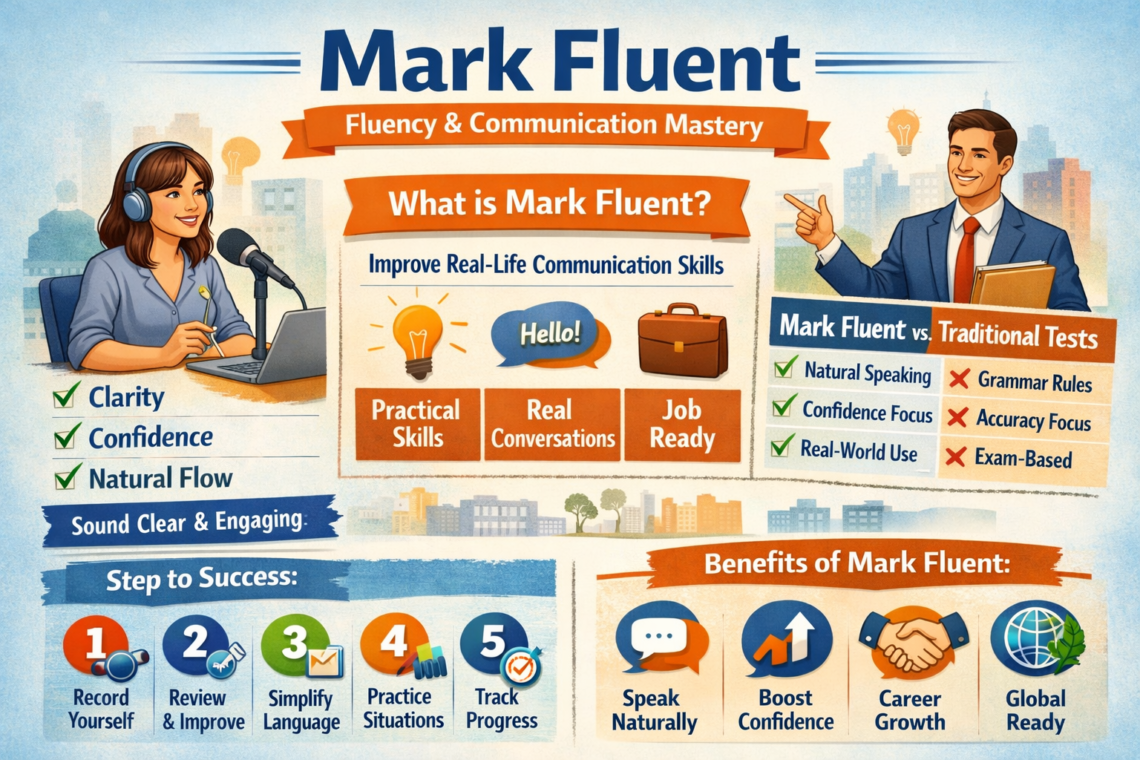
What Is Mark Fluent?
Mark Fluent refers to a fluency-focused approach or tool used to evaluate and improve spoken or written communication.
Instead of testing grammar rules alone, it emphasizes:
- Flow of speech
- Clarity of ideas
- Natural phrasing
- Listener understanding
In simple terms, it helps answer one key question:
“Do you sound clear, confident, and natural to real people?”
How Mark Fluent Works
Mark Fluent typically evaluates communication using practical fluency markers rather than textbook rules.
Core Fluency Markers
- Sentence flow and pacing
- Vocabulary relevance
- Pronunciation clarity
- Logical idea progression
- Confidence and tone
This approach mirrors how humans actually judge communication in real life.
Who Should Use Mark Fluent?
Mark Fluent is especially useful for beginners and intermediate users.
Common Use Cases
- ESL learners targeting U.S. workplaces
- Job interview preparation
- Public speakers and presenters
- Customer support professionals
- Students improving academic English
Real-world example:
A job candidate may have perfect grammar, but if their answers sound forced or unclear, Mark Fluent would flag that gap.
Mark Fluent vs Traditional Language Testing
| Feature | Mark Fluent | Traditional Tests |
|---|---|---|
| Focus | Real communication | Grammar rules |
| Measures flow | Yes | Limited |
| Practical use | High | Moderate |
| Real-world readiness | Strong | Weak |
| Confidence assessment | Included | Not included |
Key difference:
Traditional tests measure correctness.
Mark Fluent measures effectiveness.
Benefits of Using Mark Fluent
Key Advantages
- Improves real conversational ability
- Builds confidence, not just accuracy
- Helps users sound natural, not robotic
- Aligns with workplace communication needs
For professionals in the U.S., this distinction matters more than test scores.
Pros and Cons of Mark Fluent
Pros
- Practical and human-centered
- Ideal for real conversations
- Useful for career growth
- Focuses on clarity and impact
Cons
- Less structured than grammar tests
- Requires practice and feedback
- Not ideal for exam-only preparation
Step-by-Step: How to Improve Using Mark Fluent
Step 1: Record Natural Speech
Speak on a real topic, not memorized text.
Step 2: Review Fluency Markers
Focus on pauses, clarity, and flow.
Step 3: Simplify Language
Clear ideas beat complex vocabulary.
Step 4: Practice Real Scenarios
Interviews, meetings, or presentations.
Step 5: Repeat and Track Progress
Consistency matters more than perfection.
Common Mistakes to Avoid
- Speaking too fast to “sound fluent”
- Overusing advanced words unnaturally
- Ignoring pauses and tone
- Memorizing instead of understanding
Fluency is about connection, not speed.
Is Mark Fluent Worth It in 2025?
For learners and professionals focused on real communication, yes.
U.S. employers and audiences care more about:
- Clear ideas
- Confident delivery
- Natural expression
Mark Fluent aligns well with those expectations.
Frequently Asked Questions (FAQ)
What does Mark Fluent mean?
Mark Fluent refers to evaluating and improving communication based on clarity, flow, and real-world effectiveness rather than grammar alone.
Is Mark Fluent good for beginners?
Yes. It helps beginners focus on speaking clearly without overthinking rules.
Can Mark Fluent help with job interviews?
Absolutely. It improves confidence, structure, and natural responses.
Is Mark Fluent better than grammar tests?
It’s different. Grammar tests check accuracy; Mark Fluent checks usability.
Is Mark Fluent suitable for U.S. workplaces?
Yes. It matches how communication is judged in professional American environments.
Final Thoughts
Fluency isn’t about sounding perfect.
It’s about being understood, trusted, and confident.
If your goal is real communication, not just scores, Mark Fluent is a smart direction to explore in 2025.

