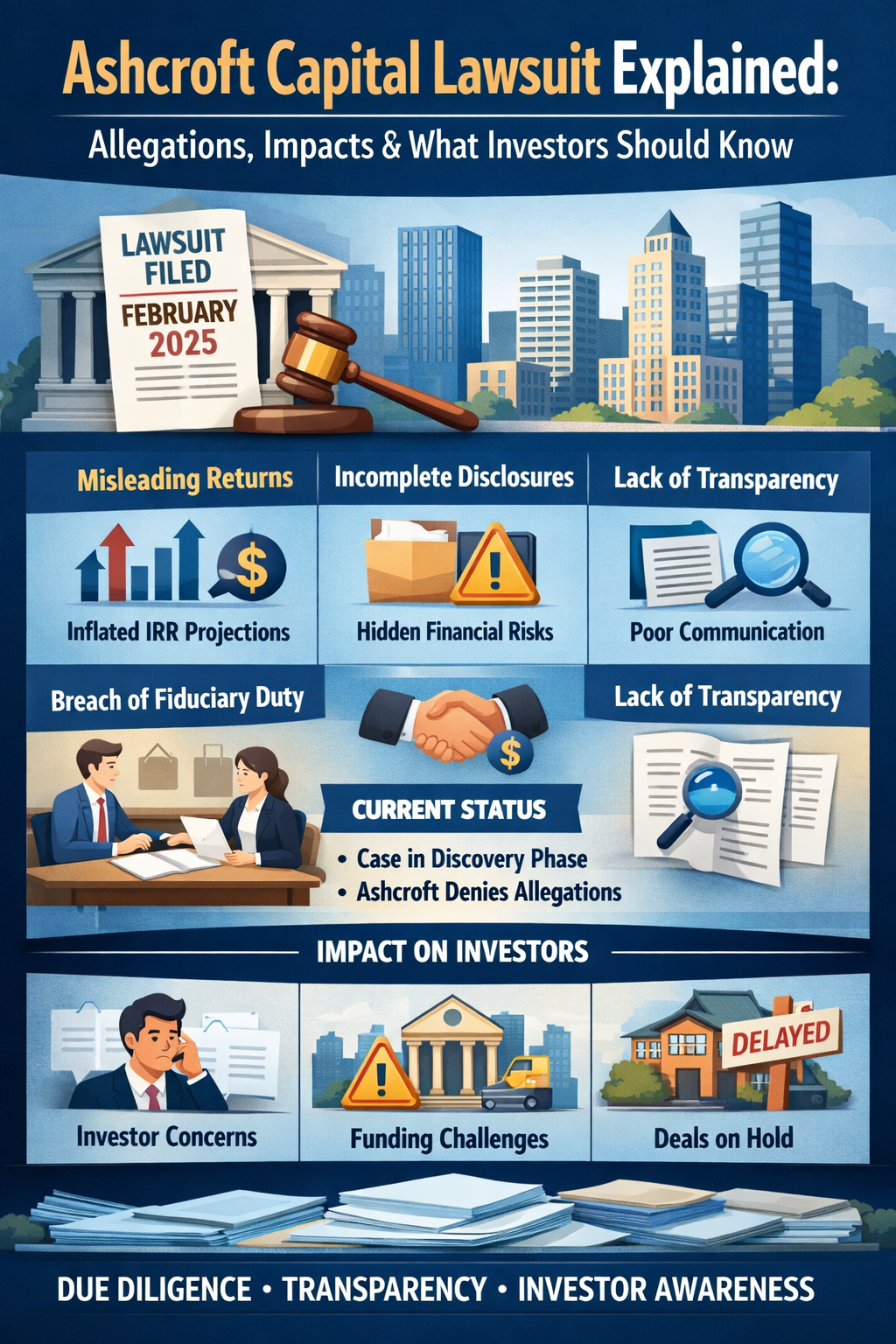
The Ashcroft Capital lawsuit refers to a high‑profile legal case filed in early 2025 by a group of investors against Ashcroft Capital, a major U.S. real‑estate investment and syndication firm. The lawsuit revolves around claims that the company made misleading investment projections, withheld key financial information, and breached its fiduciary duty to investors. As the case unfolds in court, it has drawn attention across the real‑estate investment community—and raised important questions about transparency and investor protection.
1. What Is the Ashcroft Capital Lawsuit?
The lawsuit, often referred to as Cautero v. Ashcroft Legacy Funds, was filed in February 2025 by a group of 12 accredited investors who invested in one of Ashcroft’s legacy investment funds. They allege that Ashcroft Capital and its principals misrepresented key financial details, promised overly optimistic returns, and misled investors about risks that later materialized.
2. Key Allegations in the Lawsuit
Here are the core claims made by the plaintiffs:
a. Misrepresentation of Investment Returns
Investors allege that Ashcroft provided inflated Internal Rate of Return (IRR) projections in marketing materials, private placement memorandums (PPMs), and webinars—figures that did not reflect real market conditions or actual performance.
b. Incomplete Financial Disclosures
The complaint argues that Ashcroft failed to fully disclose crucial risks, like heavy reliance on variable interest‑rate financing, refinancing challenges, and expected capital calls—factors that impacted investor outcomes.
c. Breach of Fiduciary Duty
Investors claim the firm didn’t act in their best interests. Instead, they allege that Ashcroft’s own profits and fee structures were prioritized, especially in ways that were not transparent to Limited Partners (LPs).
d. Lack of Transparency
Plaintiffs argue that Ashcroft’s communications were vague, sometimes delayed, and did not clearly outline the true financial health or risks of the properties and funds.
3. Lawsuit Current Status & Legal Process
As of now, the case is in the discovery phase, meaning both sides are exchanging documents, financial records, and internal communications. Ashcroft has denied the allegations and filed motions to dismiss certain claims. Depositions of executives and fund managers are expected to play a significant role in how the case proceeds.
No final judgment, settlement, or regulatory action has been announced yet.
4. Broader Impact on Ashcroft and Investors
Even before a court verdict, the lawsuit has already influenced Ashcroft Capital’s business operations:
- Investor skepticism has grown, with complaints on forums and social media about delayed payouts and additional capital calls.
- Financing sources reportedly became more cautious, limiting access to traditional credit due to ongoing litigation risk.
- Some potential deals and acquisitions have been put on hold as capital partners reconsider commitments.
These trends reflect how legal disputes can affect not just the defendants but also investor confidence in a firm.
5. Why This Lawsuit Matters to Real‑Estate Investors
The Ashcroft Capital lawsuit isn’t just about one company. It highlights important issues in private real‑estate investing:
🔹 Importance of Due Diligence
Investors are reminded to thoroughly review offering documents, financial models, and risk disclosures—not just marketing materials.
🔹 Transparency and Communication
Sponsors must communicate risks clearly and consistently; investors need regular, accurate updates.
🔹 Regulatory Scrutiny Potential
If the court finds misrepresentation under securities law standards, it could influence how the SEC views similar syndications in the future.
Frequently Asked Questions (FAQs)
Q1. Is Ashcroft Capital guilty?
Answer: No final ruling has been made. The case is in discovery, and Ashcroft denies the plaintiffs’ claims. A jury or judge will decide based on evidence presented.
Q2. When was the lawsuit filed?
Answer: The lawsuit was filed on February 12, 2025 in a U.S. District Court in New Jersey.
Q3. What are investors seeking in damages?
Answer: Plaintiffs allege more than $18 million in losses due to the alleged misrepresentation and lack of disclosure.
Q4. Does this mean Ashcroft Capital will go bankrupt?
Answer: Not necessarily. Lawsuits don’t automatically lead to bankruptcy. Financial impact depends on damages awarded, insurance coverage, and the firm’s resources.
Q5. Should current investors worry?
Answer: Investors should stay informed, review communications from Ashcroft, understand their legal rights, and consult financial or legal advisors if needed.
Conclusion
The Ashcroft Capital lawsuit is a landmark case in the private real‑estate investment world, spotlighting key concerns about transparency, fiduciary duty, and risk disclosure. Whether you’re a current investor, considering real‑estate syndications for the first time, or simply watching market trends, this case underscores the importance of due diligence, realistic expectations, and informed decision‑making.
