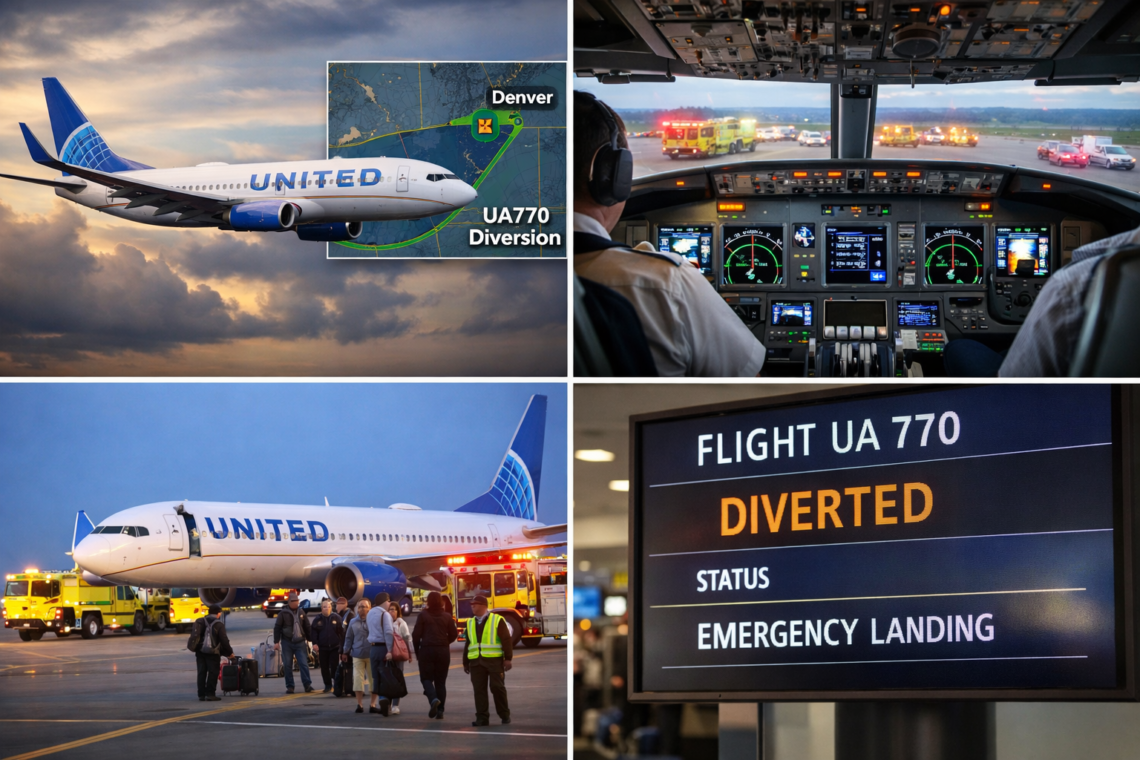
When news breaks about an United Airlines flight UA770 emergency diversion, it naturally raises questions among travelers and the wider public. Emergency diversions are uncommon, but they play a critical role in modern aviation safety. Understanding what such an event represents—and how airlines manage it—helps passengers make sense of aviation decisions that are often made quickly and quietly for safety reasons.
This topic matters because commercial air travel depends on layered safety systems, clear procedures, and trust. An emergency diversion is not a failure of the system; it is often evidence that the system is working as designed.
Understanding the Core Idea Behind an Emergency Diversion
An emergency diversion occurs when a flight changes its planned route and lands at an alternate airport due to a safety, medical, technical, or operational concern. In the case of the United Airlines flight UA770 emergency diversion, the key idea is prevention rather than reaction.
Aviation philosophy prioritizes early decision-making. If a potential issue arises—whether related to a passenger, aircraft systems, or external conditions—diverting early reduces risk and allows ground teams to respond effectively. These decisions are guided by strict protocols rather than discretion alone.
How This Fits Into Everyday Digital and Travel Life
For most travelers, flight updates appear through airline apps, airport displays, and mobile notifications. An event like the United Airlines flight UA770 emergency diversion becomes part of the digital travel experience almost instantly.
Passengers rely on real-time systems that track aircraft status, rebooking options, and support services. Behind the scenes, airlines coordinate with air traffic control, maintenance crews, and customer service platforms to manage both safety and communication.
Design and Usability of Airline Safety Systems
Modern aviation systems are built for clarity and speed. Flight decks use standardized alerts, checklists, and interfaces that reduce confusion during high-pressure situations. This design approach ensures that crews can assess conditions and act decisively.
From a passenger perspective, usability shows up in clear announcements, timely updates, and intuitive rebooking tools. Events like the United Airlines flight UA770 emergency diversion highlight how well these systems function under stress.
Performance, Reliability, and Trust Factors
Emergency diversions are closely monitored by regulators and airlines alike. Each incident is documented, reviewed, and used to improve future performance. Reliability in aviation is measured not by the absence of issues, but by how effectively they are handled.
The United Airlines flight UA770 emergency diversion reinforces a broader trust factor: airlines are willing to interrupt schedules to prioritize safety. This transparency and consistency help maintain long-term confidence in air travel.
Who Benefits Most From These Procedures
While no one welcomes a disrupted journey, emergency diversion protocols benefit multiple groups. Passengers gain reassurance that safety takes precedence over punctuality. Crew members operate within clear guidelines that support sound judgment. Airlines benefit from reduced risk and stronger safety records.
Even future travelers benefit, as lessons learned from events like the United Airlines flight UA770 emergency diversion contribute to continuous improvement across the industry.
General Comparison With Similar Aviation Responses
Across the aviation sector, emergency diversions follow similar principles regardless of airline or route. Standardized international regulations ensure that responses are consistent and predictable.
What differentiates operators is how smoothly the process is executed—communication clarity, passenger support, and recovery planning. In that sense, the handling of situations such as the United Airlines flight UA770 emergency diversion reflects broader operational maturity rather than isolated action.
Long-Term Value and Future Outlook
Aviation continues to invest in predictive maintenance, health monitoring systems, and enhanced communication tools. These advances aim to identify potential issues earlier and reduce disruption while maintaining safety margins.
Over time, data from emergency events improves training, technology, and procedures. The long-term value of addressing incidents like the United Airlines flight UA770 emergency diversion lies in making an already safe industry even more resilient.
Conclusion
An emergency diversion can sound alarming, but it is best understood as a safeguard rather than a setback. The United Airlines flight UA770 emergency diversion illustrates how modern aviation prioritizes safety through preparation, design, and disciplined decision-making.
For passengers, this understanding builds confidence. For the industry, it reinforces a culture where caution is valued over convenience. In the broader context of air travel, emergency diversions remain a vital part of keeping millions of journeys safe every year.

